
My Work:
Please click on the photos to explore each project in more depth.
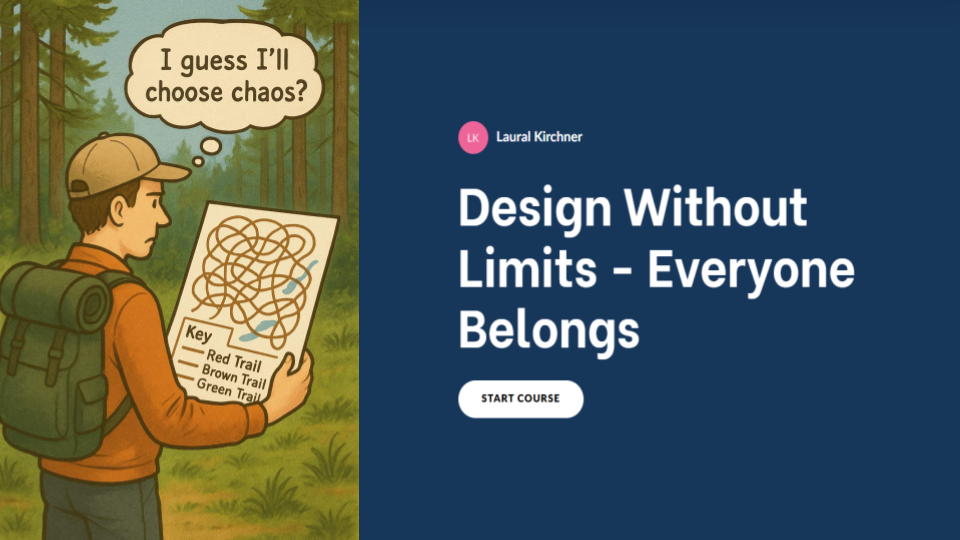
Design Without Limits – Visual Accessibility in Instructional Design
Design Without Limits is a mini lesson created in Rise 360 that teaches learners simple strategies to make instructional design content more accessible. The lesson shows how small design choices, such as improving contrast, using clear text, and not relying on color alone, can have a big impact. It is designed to be a standalone mini lesson or part of a larger learning module.
My Role: I designed all elements of the lesson using the ADDIE model, including analysis, design, development, and planning for implementation and evaluation. I created interactive scenarios and a downloadable accessibility checklist to help learners apply accessibility principles in practical ways.
Highlights:
Practical guidance on visual accessibility
Interactive scenarios to reinforce learning
Downloadable checklist for ongoing use
Educational Eclipse Book:
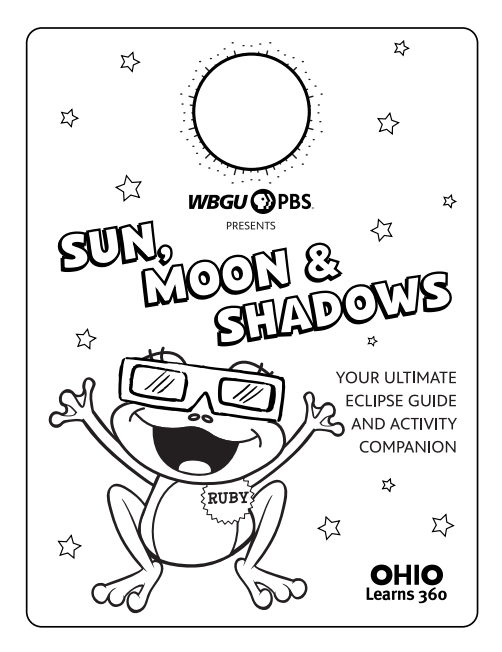
Sun, Moon & Shadows: Your Ultimate Eclipse Guide and Activity Companion is a downloadable, multi-age activity book created for the Total Solar Eclipse that crossed the U.S. viewing path. I developed this resource after noticing a lack of accessible and high-quality educational materials for families. The result is a comprehensive cross-curricular guide designed to engage children of many ages and the adults learning with them.
This 40+ page activity book includes hands-on science explorations, shadow experiments, literacy connections, math extensions, and creative arts activities. All activities are linked to eclipse concepts and are designed to support both classroom learning and family use. The book provides clear instructions, adaptable difficulty levels, and relies on minimal materials.
The resource was featured by the Ohio Department of Education and Workforce and was made available through the WBGU-PBS website, where it has been downloaded more than 10,000 times.
Self Regulated Learning Learning Video:
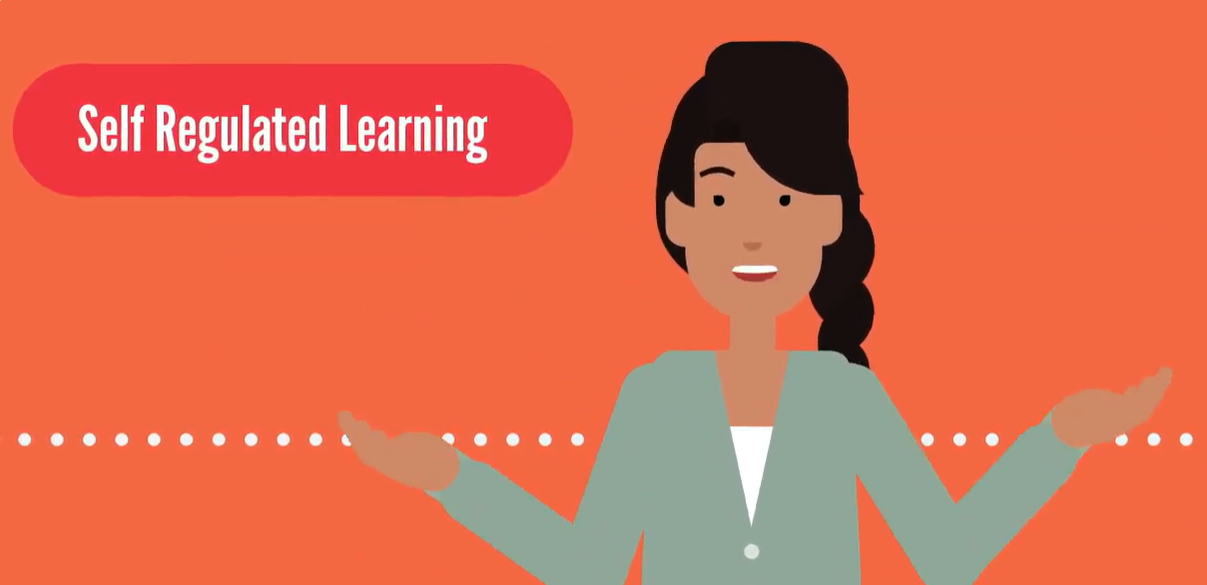
Vyond animation designed for the STEM Fluency organization to help learners understand and apply self-regulated learning. I created an animated video using Vyond with a script written by Dr. Gao for the STEM Fluency organization to explain the concept of self-regulated learning. The video introduces learners to strategies they can use to understand and guide their own learning, helping them plan, monitor, and adjust their study behaviors. I tried to design the video to be engaging, clear, and accessible, that makes complex concepts into a format that is easy for a wide range of learners to understand.
Cognitivist Learning Theory Screencast Video
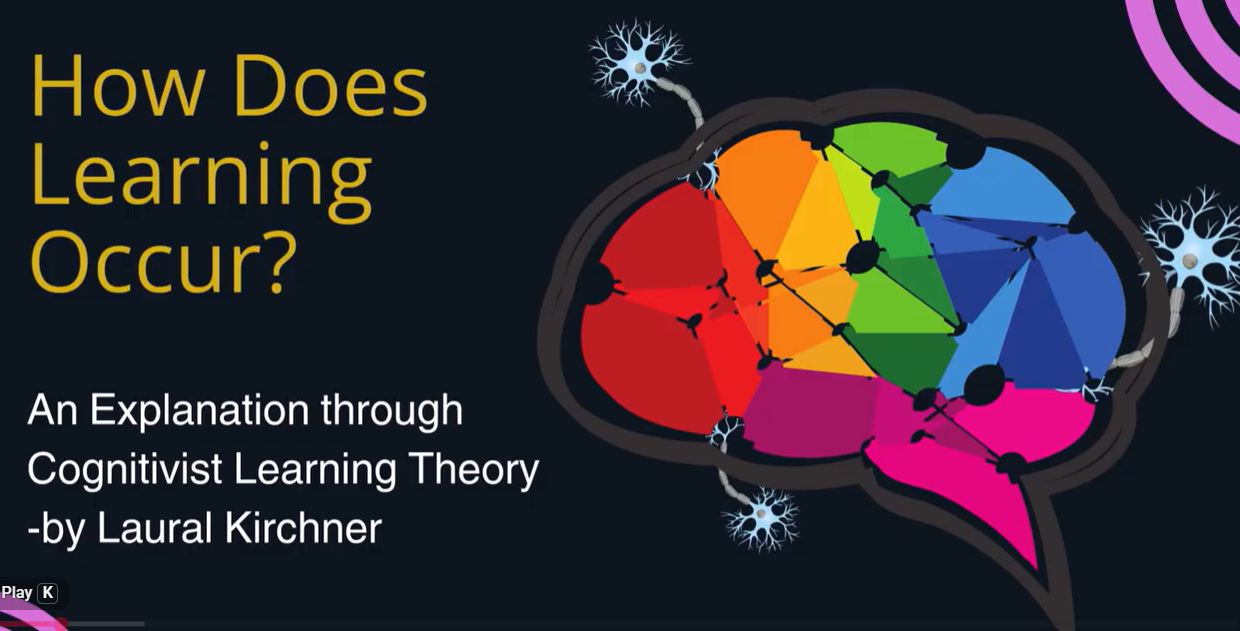
I created a screencast in Camtasia to explain cognitivist learning theory and its implications for instructional design. The video addresses how learning occurs according to cognitivist principles, explores instructional strategies that support cognitive processing, and demonstrates how media and technologies can be used to enhance learning. I developed the script, visuals in Canva, and narration to present the material clearly and engagingly, making complex theory accessible for learners and practitioners.
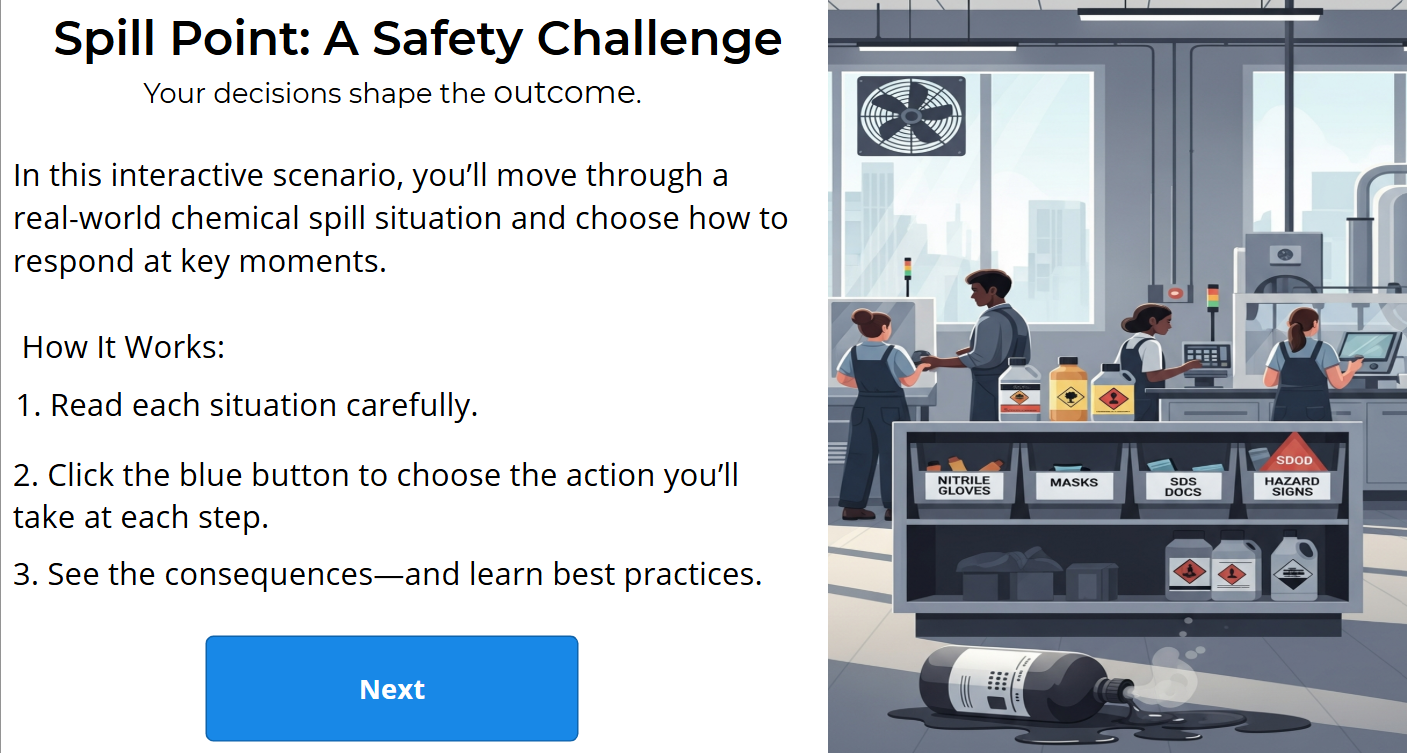
The Chemical Spill Branching Scenario:
Chemical spill safety simulation created in Storyline designed to build learner confidence in making real-world safety decisions. This branching scenario is my artifact from a group project with Alayna Isaly, Katie Gankosky, and Katie Shergalis. I was solely responsible for developing this portion, which applies Kolb’s Experiential Learning Theory by immersing learners in a realistic chemical spill situation. Learners make decisions, receive immediate feedback, and reflect on their choices to connect actions to safety principles. They can experiment with different approaches in a safe simulation, building confidence, understanding, and the ability to transfer learning to real-world workplace situations.